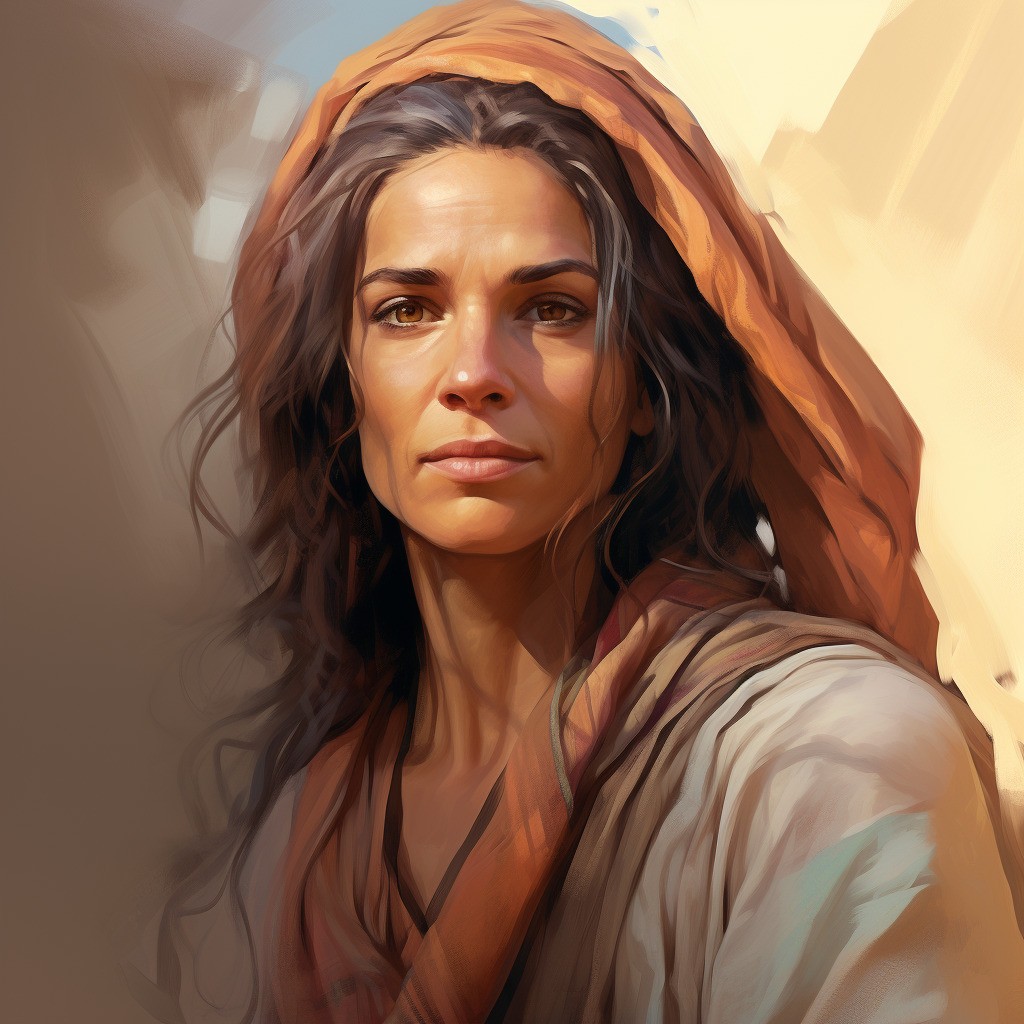
The prophetess is named once, in Isaiah’s words quoted in 2 Nephi: Isaiah went to her, and she conceived and bore a son, whom the Lord directed Isaiah to name Maher-shalal-hash-baz (2 Nephi 18:3). That same name had already been written on a great roll before faithful witnesses, Uriah the priest and Zechariah the son of Jeberechiah — the roll-writing and the witnesses came before the birth (2 Nephi 18:1-2).
The name marked a coming judgment: before the child was old enough to say “My father” or “My mother,” the riches of Damascus and the spoil of Samaria would be carried off by the king of Assyria, who would also overflow into Judah (2 Nephi 18:4-8). The text designates her “prophetess” rather than merely Isaiah’s wife, a title that implies recognized spiritual standing in her own right, even though the record preserves no teachings of her own.