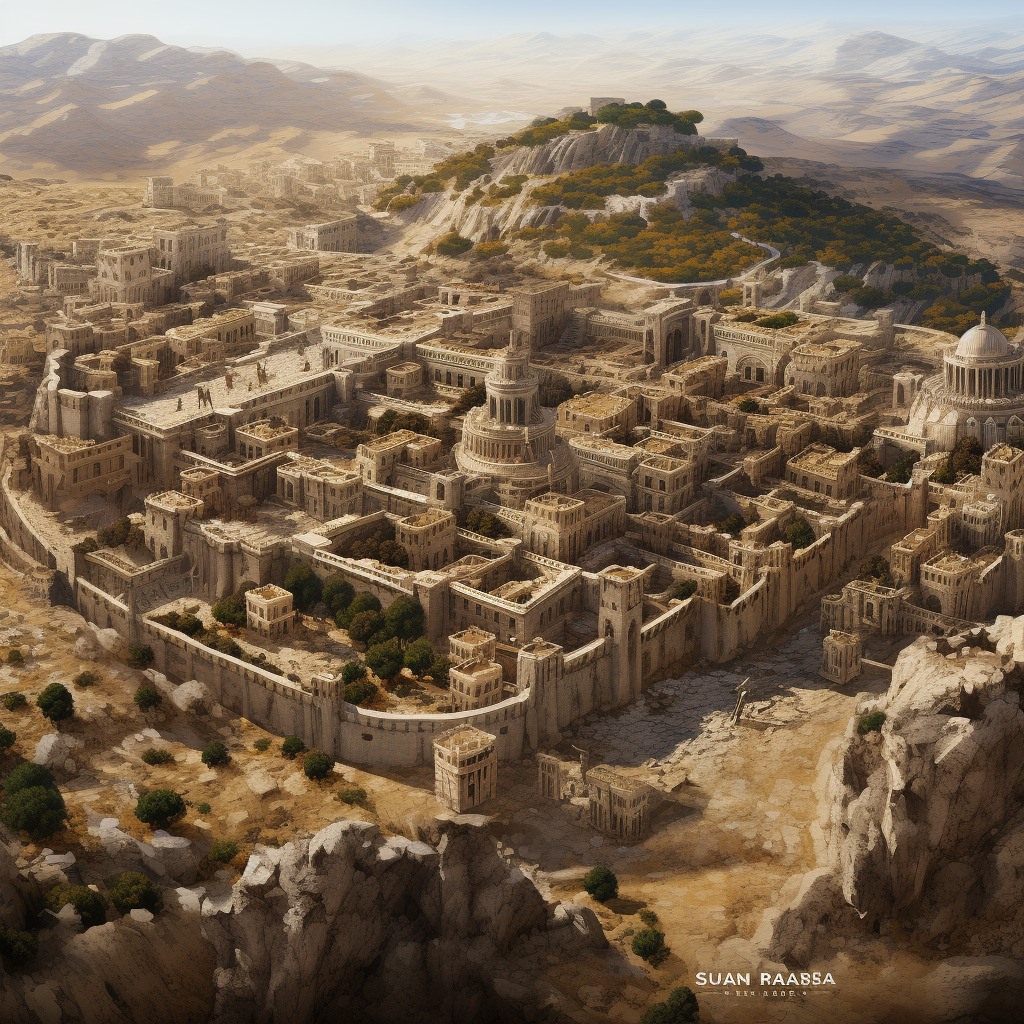
Samaria was the capital of the Northern Kingdom of Israel. Jeroboam first built Shechem as his seat, and the kingdom was later governed from Tirzah, before Omri bought the hill Samaria from Shemer for two talents of silver and built the city, naming it after Shemer (1 Kings 12:25, 14:17, 16:24).
The city held the Northern Kingdom’s political and religious center. Ahab reared an altar to Baal in a temple he built at Samaria (1 Kings 16:32). His son Jehoram put away the image of Baal his father had made (2 Kings 3:2), and Jehu later gathered the prophets and priests of Baal at Samaria and destroyed them (2 Kings 10:19). In Nephi’s quotation of Isaiah, Samaria is named as the head of Ephraim and is paired with Damascus and Jerusalem as cities marked for spoil and judgment for their idols (2 Nephi 17:9, 18:4, 19:9, 20:10, 20:11, 20:9).
Samaria stood on a hill rising above 300 ft with steep sides, especially to the east, within the broad fertile hollow known as Wady esh-Sha’ir, the “valley of barley.” The height let the city withstand prolonged sieges against ancient projectile weaponry. The land was covered with olive groves and vineyards, and from the western crest the Plain of Sharon and the Mediterranean were visible.
Assyria conquered Samaria, deported many of its residents, and resettled the cities with people from Babylon, Cuthah, Ava, Hamath, and Sepharvaim (2 Kings 17:24; Ezra 4:10). The land was conquered and rebuilt again under the Greeks, Romans, Persians, and others.