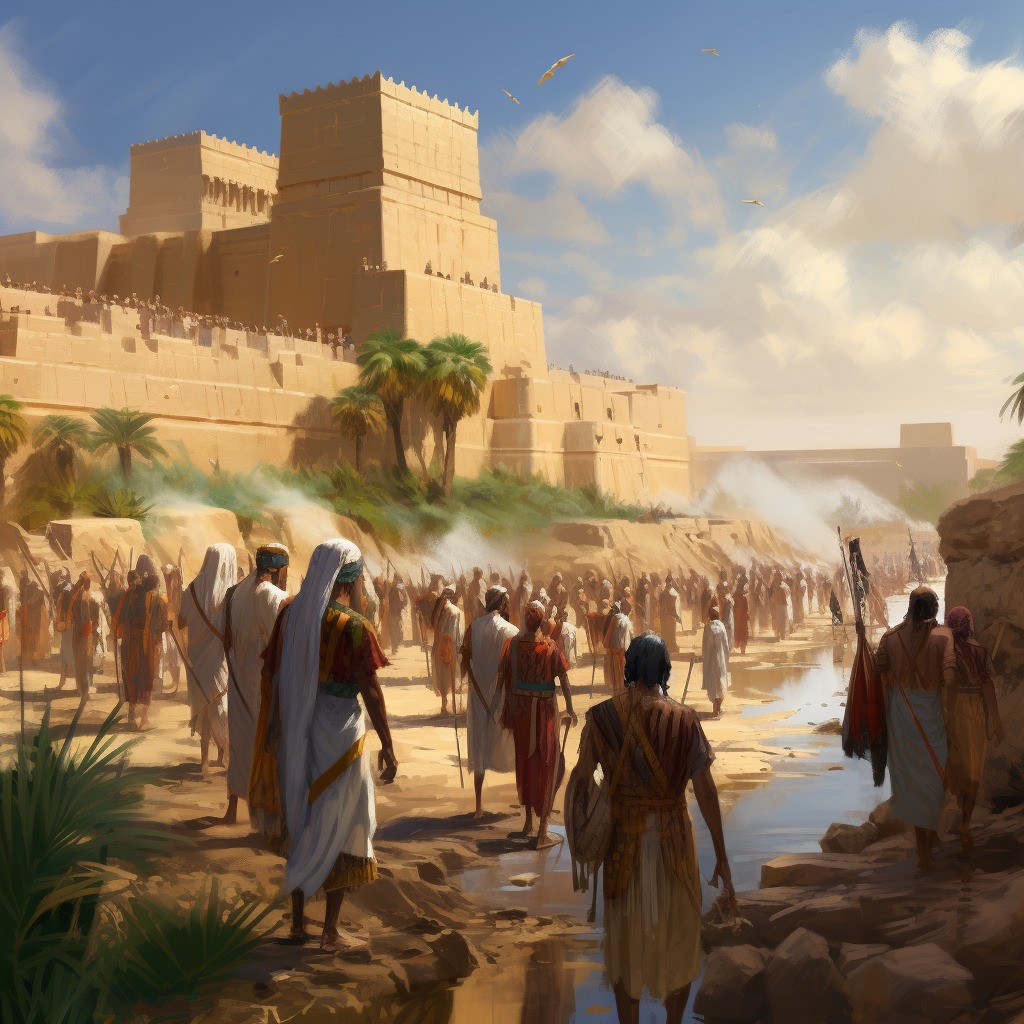
The Mulekites, called in the record the people of Zarahemla, descended from Mulek, a son of Zedekiah, king of Judah (Mosiah 25:2; Helaman 8:21). They came out from Jerusalem at the time Zedekiah was carried captive into Babylon, and were brought across the great waters into the land where Mosiah later found them (Omni 1:15-16). Having brought no records with them, their language had become corrupted, and they denied the being of their Creator, so that Mosiah and his people could not at first understand them (Omni 1:17). The land they occupied took the name Zarahemla, after their leader at the time they were discovered.
Mosiah, warned by the Lord, had fled the land of Nephi with those who would follow him and came down to the land of Zarahemla. The people of Zarahemla rejoiced at his arrival, in part because he brought the plates of brass containing the record of the Jews (Omni 1:14). The two peoples united, and Mosiah was appointed king over them (Omni 1:19).
The people of Zarahemla had become more numerous than the descendants of Nephi (Mosiah 25:2), though the Nephites and people of Zarahemla together were fewer than half as many as the Lamanites (Mosiah 25:3). The term Mulekite appears only in chapter headings, not in the text itself. In a dispute with the Nephites at Zarahemla, the prophet Nephi cited the survival of Mulek when Zedekiah’s other sons were slain, and the presence of Zedekiah’s seed among them, as evidence that Jerusalem had been destroyed (Helaman 8:21).