Jesus Christ, called the Messiah, the Holy One of Israel, and the Redeemer, is the Son of God, the Creator, and the Savior whose atoning sacrifice the prophets of the record foretold. Nephi identifies him as the prophet Moses spoke of, who would be raised up from among the people, like unto Moses, and whom every soul must hear (Deuteronomy 18:15-19; 1 Nephi 22:21; 3 Nephi 20:23).
His mortal life is prophesied in detail before his coming. Nephi sees the virgin who is “the mother of the Son of God, after the manner of the flesh” (1 Nephi 11:18); Alma states that he would be born of Mary at Jerusalem (Alma 7:10); and King Benjamin reports the angel’s word that “he shall be called Jesus Christ, the Son of God” (Mosiah 3:8). Alma further teaches that Christ would take upon himself the pains, sicknesses, and infirmities of his people — not only their sins — so that “his bowels may be filled with mercy, according to the flesh, that he may know according to the flesh how to succor his people” (Alma 7:11-13). Amulek teaches that he would come to redeem people from their sins, not in their sins, a teaching Helaman later recalls to his sons (Alma 11:33-37; Helaman 5:10). Lehi foretells his coming six hundred years after the family left Jerusalem (1 Nephi 10:4), and Nephi gives his name as Jesus Christ on the same six-hundred-year timing (2 Nephi 25:19). The record insists repeatedly that salvation comes in no other way: King Benjamin’s angel declares there is “no other name given nor any other way nor means whereby salvation can come unto the children of men, only in and through the name of Christ” (Mosiah 3:17); Benjamin’s own covenant address repeats that “there is no other name given whereby salvation cometh” (Mosiah 5:8); and Helaman tells his sons that “there is no other way nor means whereby man can be saved, only through the atoning blood of Jesus Christ” (Helaman 5:9).
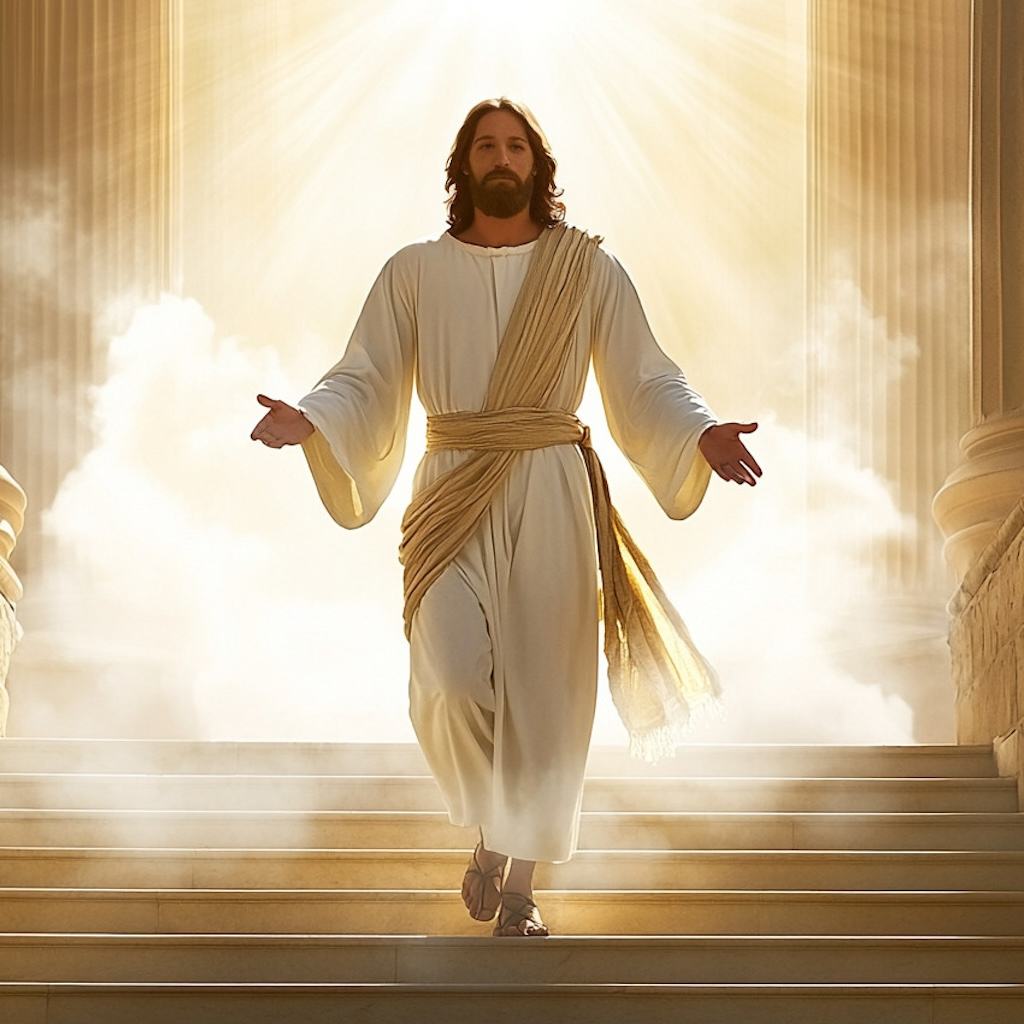
3 Nephi records his appearance to the people at the temple in Bountiful after the destruction. A Man clothed in a white robe descended from heaven and stood among the multitude (3 Nephi 11:8). He invited them to come forth and thrust their hands into his side and feel the prints of the nails in his hands and feet, that they might know he was the God of Israel who had been slain for the sins of the world; the multitude went forth one by one and did so (3 Nephi 11:13-15). He then declared his doctrine: that all must repent, believe in him, and be baptized, and that the Father, the Son, and the Holy Ghost bear record of one another (3 Nephi 11:31-41).
He instituted the sacrament of bread and wine, commanding that an ordained disciple administer it in remembrance of his body and blood (3 Nephi 18:1-12), and taught that those who repent, are baptized, and endure to the end will be held guiltless at the judgment (3 Nephi 27:13-21). He called the sick, lame, blind, and afflicted to be brought to him and healed them (3 Nephi 17:7). He knelt and prayed to the Father in words that could not be written (3 Nephi 17:14-20), and wept as he took the little children one by one and blessed them (3 Nephi 17:21).
The voice that spoke from the darkness before his appearance identified him as Jesus Christ, the Son of God, who destroyed the wicked cities and called the survivors to return and be healed (3 Nephi 9:3-15). In his own words to the multitude, he is the light and the life of the world, who drank the bitter cup the Father gave him and took upon himself the sins of the world (3 Nephi 11:11).