모세

위대한 히브리 선지자

❮ 이전

모세

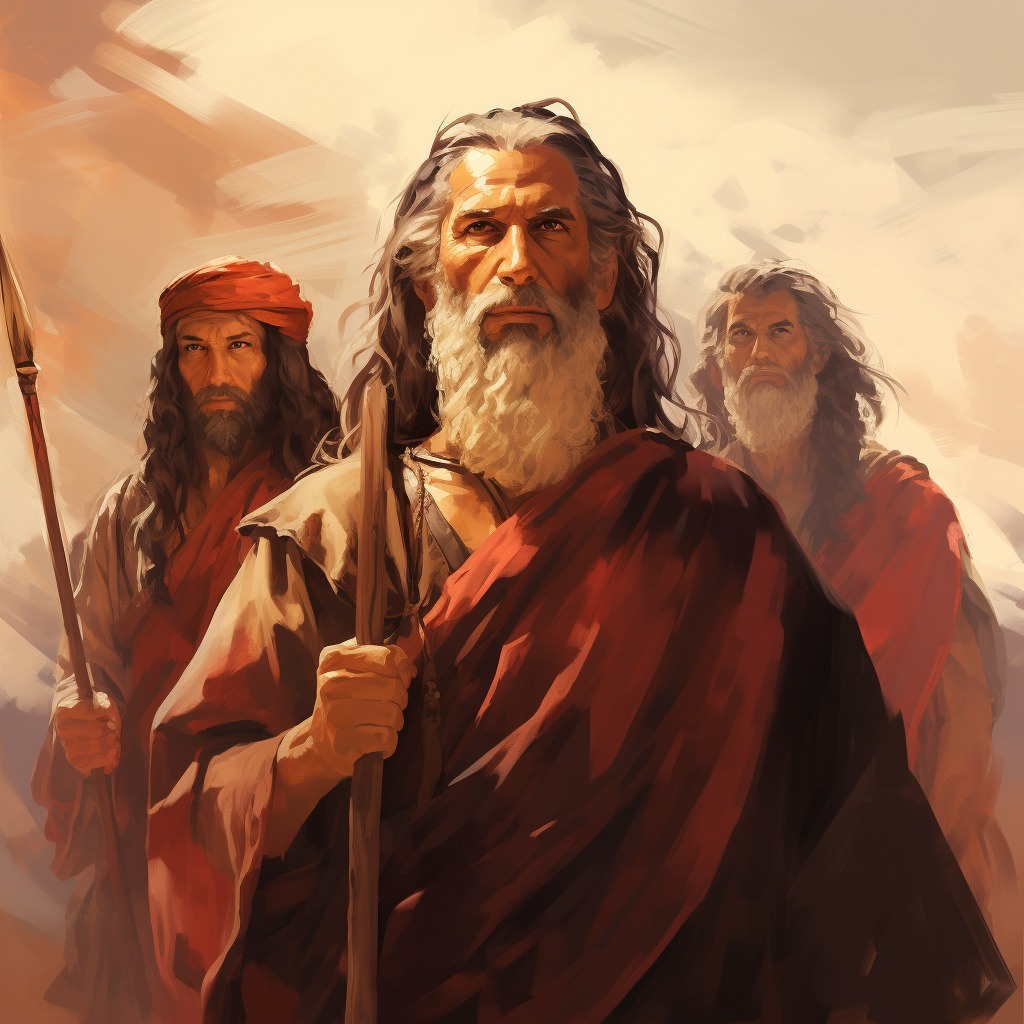
Moses was the prophet and lawgiver who led Israel out of bondage in Egypt; the Nephites kept the law of Moses until Christ declared it fulfilled and ended in him at his coming (3 Nephi 15:4-8). His account stood on the brass plates as the five books of Moses, which contained the account of the creation of the world and of Adam and Eve (1 Nephi 5:11). Joseph’s prophecy, preserved by Lehi, foretold that the Lord would raise up a Moses, give him power in a rod, write his law for him by the finger of God, and provide him a spokesman (2 Nephi 3:17).

The event the Nephite record returns to most is the dividing of the Red Sea: by Moses’ word the waters parted so the Israelites passed through on dry ground while Pharaoh’s army was drowned (1 Nephi 4:2; 17:26; Helaman 8:11). By the power of God in him, Moses also struck a rock so that water came forth for Israel to drink (1 Nephi 17:29), and the Lord raised him up to deliver his people out of Egypt (2 Nephi 3:10).

Moses’ face shone brightly while he was in the mount of Sinai speaking with the Lord; Abinadi’s face shone the same way when he testified before King Noah (Mosiah 13:5). When Moses lifted up the brazen serpent in the wilderness, it was a type of the Son of God, who would likewise be lifted up (Helaman 8:14). Moses prophesied of the coming of the Messiah and of God redeeming his people (Mosiah 13:33), and foretold a prophet whom the Lord would raise up “like unto me,” whom every soul must hear or be cut off — words Christ applied to himself (3 Nephi 20:23).

At the end of his life the Lord took Moses unto himself; the same account is cited to explain Alma’s departure, said to have been taken up by the Spirit or buried by the hand of the Lord, as Moses was (Alma 45:19).

❮ 이전