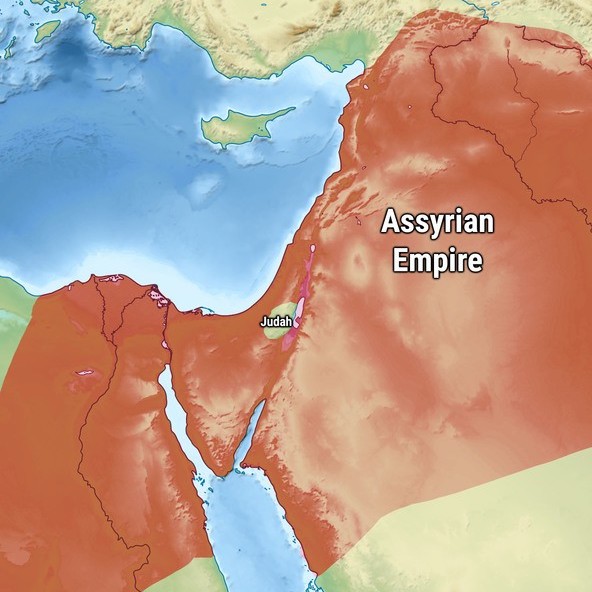
Assyria was an empire centered on the Tigris River in present-day northern Iraq, lasting from roughly the mid-third to the mid-first millennium B.C. It reached its height in the Neo-Assyrian period (mid-ninth through late seventh centuries B.C.), when it became the largest empire in the ancient Near East of its time.
Assyria conquered the northern kingdom of Israel during the reign of Hoshea, Israel’s last king (732–722 B.C.). The Assyrians besieged Samaria and deported its people (2 Kings 17:5; 18:9), the population later remembered as the “lost ten tribes.” In 701 B.C. Sennacherib took the fortified cities of Judah, though Jerusalem was spared after the angel of the Lord struck his camp; Sennacherib returned to Nineveh and was killed there by two of his sons (2 Kings 18:13–19:37). Nineveh, the Assyrian capital, fell to the Medes and Babylonians in 612 B.C., and the empire was finished off by the Neo-Babylonians in 609 B.C.
Assyria appears in the Book of Mormon within the Isaiah chapters Nephi quoted. There it is named as the king who would come against Ephraim and Judah (2 Nephi 17:17, 20 // Isa. 7:17, 20), the river that would overflow into Judah “even to the neck” (2 Nephi 18:6–8 // Isa. 8:6–8), and “the rod of mine anger,” an instrument the Lord uses to punish and is then himself punished (2 Nephi 20:5, 12, 24; 24:25). Assyria is also named among the lands from which the Lord will recover the remnant of his people when he gathers Israel a second time (2 Nephi 21:11, 16 // Isa. 11:11).