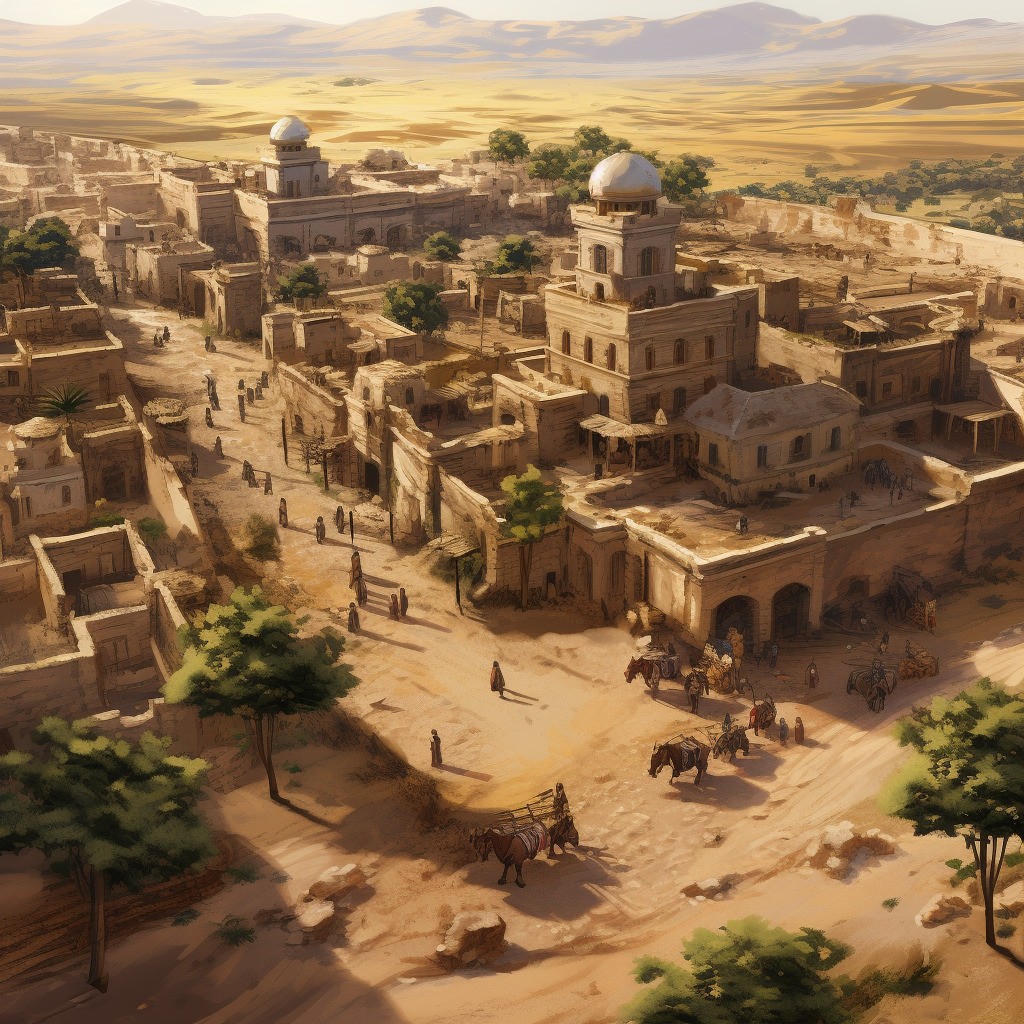
Michmash was a town in the territory of Benjamin, about 7 miles north of Jerusalem, corresponding to the present-day Mukhmas. It sat on the north side of the deep gorge of Wady es-Suweinit, near a narrow defile in the valley that formed a choke point on the route from the south.
During the reign of Saul, Israel’s first king, Saul stationed himself at Michmash with 2,000 men while Jonathan held Gibeah with another 1,000 (1 Samuel 13:2). Jonathan then attacked and defeated the Philistine garrison at Geba (1 Samuel 13:3), and the Philistines gathered to retaliate, pitching at Michmash with 30,000 chariots, 6,000 horsemen, and foot soldiers as numerous as sand on the seashore (1 Samuel 13:5).
Isaiah named Michmash in his account of an advancing Assyrian army moving on Jerusalem, picturing the enemy laying up its baggage there as it passed (Isaiah 10:28).
After the Babylonian exile, 122 men of Michmas returned with Zerubbabel to reoccupy the town (Ezra 2:27; Nehemiah 7:31). The town was known for its barley. Under Jonathan Maccabeus it served as a seat of government (1 Maccabees 9:73). The modern village retains stone structures, tombs, and cisterns from its ancient occupation.